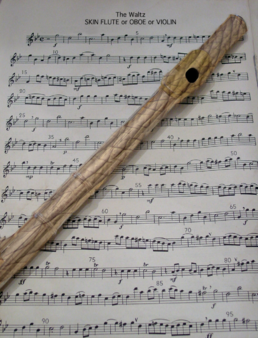
The phrase "skin flute" might conjure vastly different images depending on who hears it. For some, it evokes an ancient instrument crafted from natural materials, whispering tales of forgotten cultures. For others, it’s a modern, often humorous, piece of slang, echoing through casual conversations and online memes. This intriguing duality makes the term a fascinating subject, highlighting how language evolves and takes on new meanings over time. Understanding the context in which "skin flute" is used isn't just helpful; it's absolutely crucial to avoid confusion and appreciate its rich, albeit sometimes crude, journey.
The Historical Echoes: Unearthing the Musical "Skin Flute"
Before it became a notorious piece of modern slang, the "skin flute" was, at its core, a concept rooted in ancient craftsmanship and the resourceful use of natural materials. The idea of an instrument made from animal hide isn't as far-fetched as it might sound, especially when we consider the ingenuity of early civilizations.
Origins in Ancient Craftsmanship
In epochs long past, when modern plastics and metals were millennia away, early humans fashioned tools and instruments from whatever their environment provided. Animal skins, readily available from hunting, were incredibly versatile. They were used for clothing, shelter, containers, and, yes, even musical instruments. While archaeological evidence of a direct "skin flute" is rare and specific examples are hard to pinpoint, the practice of using stretched and processed animal skins for resonant bodies and vibrating elements was common.
Imagine a rudimentary flute-like instrument where the body or a significant part of it was made from carefully stretched, dried, and perhaps hardened leather or skin. Such instruments would have been unique to specific cultural traditions, likely played during rituals, storytelling, or communal gatherings. The material's natural properties—its flexibility, ability to be shaped, and acoustic qualities when taut—would have offered distinct sounds compared to flutes carved from bone, wood, or reed. These "skin flutes" were not mass-produced; rather, they were specialized, culturally significant artifacts, often imbued with spiritual meaning. Their rarity today underscores their specific place in history and the transient nature of organic materials.
Beyond the Flute: Other Skin-Based Instruments
To fully appreciate the concept of a musical "skin flute," it helps to consider the broader family of instruments made from animal hide. Drums, for instance, are perhaps the most common and enduring examples. From the djembe of West Africa to the taiko of Japan, stretched animal skin forms the vibrating membrane essential for their sound. Similarly, some early stringed instruments might have incorporated skin as part of their resonators or soundboards. This demonstrates a deep historical precedent for using skin in instrument construction, making the notion of a "skin flute" a logical, if uncommon, extension of ancient material science and musical innovation. The name itself likely originated from this practical application – a flute crafted, in part or whole, from skin or leather, its name evolving to encompass its primary material.
The Modern Lexicon: "Skin Flute" as Slang and Its Cultural Resonance
While its ancient musical lineage is fascinating, for the vast majority today, "skin flute" registers not as an artifact of historical musicology, but as a distinctly modern piece of slang. This dramatic semantic shift is a testament to the dynamic nature of language and human creativity.
From Instrument to Euphemism: The Slang Evolution
The transformation of "skin flute" into slang is generally attributed to the early 20th century. It emerged as a humorous, often euphemistic, and somewhat crude term for the male genitalia, specifically the penis. The phrase cleverly plays on a double entendre:
- "Skin" directly refers to the flesh of the body.
- "Flute" suggests an instrument that is blown into, leading to the playful, if explicit, analogy of oral sex.
This descriptive yet indirect approach allowed individuals to refer to a sensitive or taboo subject in a lighthearted, informal manner. It quickly became part of casual conversations, jokes, and locker-room banter, embedding itself into the fabric of colloquial language. The term's appeal lies in its ability to be suggestive without being overtly vulgar, relying on shared cultural understanding for its comedic impact. For a deeper dive into its dual nature, check out Skin Flute Explained: Unpacking Its Musical & Slang Meanings.
Humor, Taboo, and Pop Culture
The longevity and widespread recognition of "skin flute" as slang underscore the significant role humor plays in human communication, especially concerning taboo topics. Discussing sex and anatomy can be awkward or forbidden in many social settings. Euphemisms like "skin flute" provide a linguistic workaround, allowing people to broach these subjects playfully, reducing tension, and often eliciting laughter. This is a common phenomenon across cultures, where humor acts as a coping mechanism or a way to navigate social sensitivities.
Unsurprisingly, the term has found its way into various facets of pop culture. You might hear it in stand-up comedy routines, see it referenced in adult-oriented television shows, or encounter it in online forums and memes. Websites like Urban Dictionary, which document informal language, have played a significant role in popularizing and validating such terms, showcasing their "hilarious origins and savage uses." By appearing in these public platforms, "skin flute" cements its place in the modern lexicon, reflecting a cultural willingness to use irreverent language to discuss private matters. This humorous usage, while often seen as harmless, also reflects broader shifts in societal norms regarding explicit language and sexual topics.
Navigating the Nuances: Why Context is King
The journey of "skin flute" from a potential ancient instrument to modern slang creates a fascinating linguistic dilemma. Misunderstanding its dual nature can lead to confusion or awkwardness. This is why recognizing the context in which the term is used is not merely a suggestion, but a necessity for proper comprehension.
Misconceptions and Clarity
Many people harbor incomplete understandings of the term. Some might only be aware of its slang connotation, oblivious to its potential historical roots in music. Conversely, those few deeply steeped in ethnomusicology might genuinely conceive of an instrument crafted from hide, but miss its modern, widespread informal usage. Both perspectives hold elements of truth, yet neither tells the full story. The reality is that "skin flute" is a polysemous term – one word with multiple meanings – and its interpretation hinges entirely on the surrounding circumstances.
To avoid misinterpretation, we must consider the speaker, the audience, the setting, and the intent behind the usage. Is it an academic discussion about ancient instruments, a casual conversation among friends, or a comedic performance? Each scenario fundamentally alters the term's meaning. Ignoring context is like trying to understand a joke without knowing the setup; it simply won't make sense, or worse, it could be offensive. And to explore its roots and common misunderstandings further, read The Skin Flute: Origins, Misconceptions, and Why Context Matters.
Practical Tips for Understanding and Using the Term
Navigating words with such divergent meanings requires a thoughtful approach. Here are some practical tips to ensure clarity:
- Consider the Source: Who is speaking or writing? Is it an academic, a comedian, or a friend? Their background often hints at their intended meaning.
- Observe the Setting: A scholarly journal about ancient instruments will almost certainly refer to a musical device. A stand-up comedy club or an informal chat among peers will lean towards the slang.
- Gauge the Intent: Is the speaker aiming for education, humor, or perhaps to offend? Intent is a powerful indicator of meaning. If the context is playful and informal, the slang meaning is highly probable.
- Look for Clues: Are there other words or phrases that accompany "skin flute" that clarify its usage? For instance, "ancient ceremonial skin flute" clearly points to the instrument, while "he made a joke about a skin flute" signals the slang.
- When in Doubt, Clarify: If you're genuinely unsure, it's always best to politely ask for clarification rather than making assumptions.
- Be Mindful of Your Audience: When using the term yourself, be acutely aware of who you're speaking to. The slang usage, while humorous in some circles, can be inappropriate or offensive in others, especially in professional or mixed company.
The Evolution of Language: A Broader Perspective
The fascinating journey of "skin flute" serves as a microcosm for the broader evolution of language itself. Words are not static entities; they are living, breathing constructs, constantly adapting, acquiring new meanings, and shedding old ones. This process, known as semantic shift, is a fundamental aspect of linguistic development, driven by cultural changes, technological advancements, and the sheer creativity of human expression.
Think of other words that have undergone dramatic transformations: "awful" once meant "full of awe" (positive), "gay" meant "joyful," and "nice" meant "ignorant." The term "skin flute" perfectly illustrates this fluidity, morphing from a descriptor of a physical object crafted by human hands to a metaphorical, often humorous, reference to human anatomy. This shift isn't arbitrary; it reflects changing societal values, the development of new communication styles, and the human inclination to use language playfully, even provocatively.
Understanding the "skin flute's" dual existence reminds us that language is a powerful tool for connection, but also a potential source of misunderstanding if its nuances are ignored. It underscores the importance of historical context in appreciating the origins of words and cultural context in interpreting their contemporary usage. Ultimately, the story of the "skin flute" is a compelling narrative about how a simple phrase can encapsulate centuries of human ingenuity, humor, and the ever-changing tapestry of our shared vocabulary.
From the depths of ancient craftsmanship to the casual banter of modern slang, the term "skin flute" offers a unique glimpse into the multifaceted nature of language. Its journey is a testament to how words can evolve, taking on entirely new lives and meanings across different eras and cultural landscapes. Whether you encounter it as a rare historical artifact or a cheeky euphemism, the key to understanding lies firmly in context. By appreciating its dual identity, we not only gain clarity on a peculiar phrase but also a deeper insight into the dynamic, adaptable, and often humorous way humans interact with and shape their linguistic world.